 Fenestration
 Local Builders
 Builders' Merchants
 Architects & Specifiers
 House Builders
 Main Contractors
 Lead Generation
 Direct Marketing
 Marketing Reports
 Salestracker CRM
 STEM Email Marketing
 Mobile CRM
 Software Features
 Market Overview
 FAQs
FAQs Downloads
 GDPR
GDPR Our History
 Company News
 Careers
 Book a Demo
 Contact Us
Is CRM Dead? Why Traditional CRM Is Failing in 2026
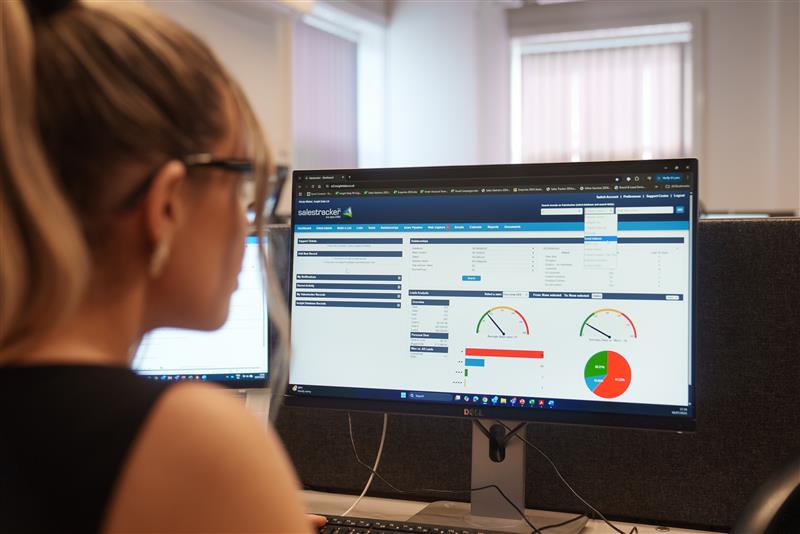
Why Data Accuracy Now Beats Feature Lists
For years, CRM vendors competed on features. Dashboards became more visual. Automations became more complex. Integrations multiplied. Yet none of those improvements solved the core issue: if the underlying data is wrong, the system cannot deliver meaningful results.
In 2026, senior sales and marketing leaders are less interested in cosmetic upgrades and more focused on accuracy, timing and relevance. A report is only useful if the contacts inside it are correct. An email campaign only performs if it reaches the right decision-maker. A forecast only holds weight if the target accounts are still active and trading. That is why the debate around the death of CRM has shifted from software design to data integrity.
The companies growing fastest are not those with the most complex CRM configuration. They are the ones operating with the most reliable, up-to-date intelligence.
The Emergence of Live CRM
Live CRM is not simply cloud-based software. It is a different operational model.
Instead of relying on internal users to maintain records, live systems are supported by ongoing external research and data feeds. When a director changes, the record updates. When a company relocates, the address changes. When a business closes, it is removed from active targeting. This matters more than ever in specialist industries such as construction, glazing, fenestration and building products, where supply chains are layered, and decision-makers are specific.
In these sectors, generic databases rarely provide depth. Broad CRM platforms lack context. Static lists decay rapidly.
That gap is where live intelligence platforms have gained traction.
Where Salestracker Fits in the 2026 Landscape
Salestracker was built on the premise that data must be maintained continuously, not periodically.
Rather than functioning purely as a contact repository, it operates as a live ecosystem. Behind the interface sits a UK-based research team verifying companies, tracking changes and updating records in real time. External feeds such as credit reference data and director information further strengthen accuracy.
The result is not simply a CRM tool. It is a continuously refreshed sector intelligence platform.
For businesses targeting construction and related markets, that difference is material. When a company appoints a new procurement lead in the morning, a live system can reflect that change quickly. A sales team using static data may not see it for months.
That timing advantage influences pipeline quality, campaign response and ultimately revenue.
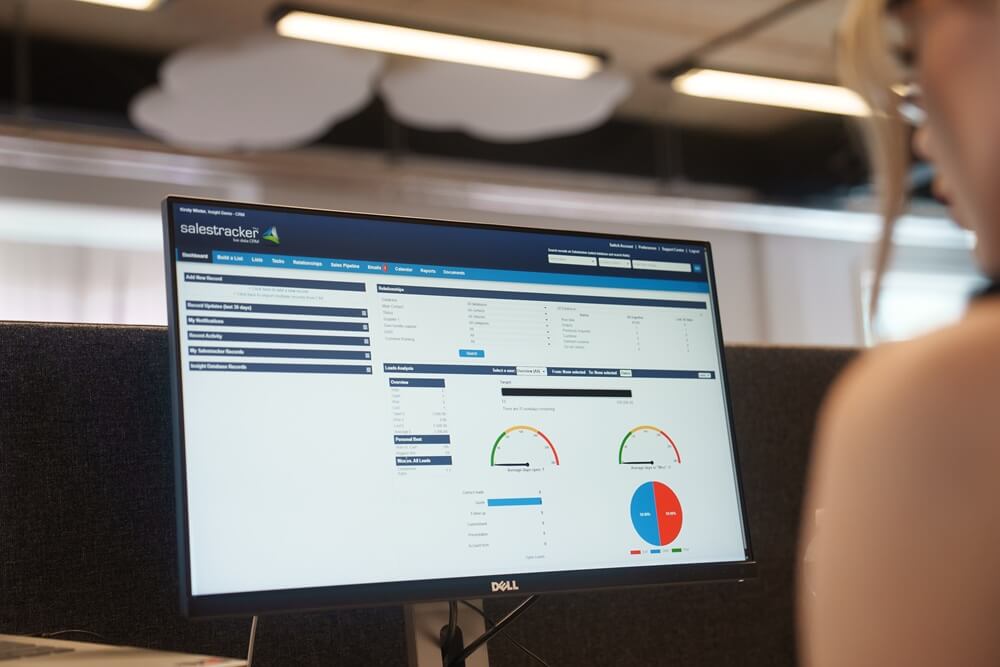
Salestracker CRM dashboard showing lead performance analytics and reporting metrics used by sales teams in construction and glazing sectors.
CRM Versus Intelligence: A Structural Difference
Traditional CRM systems ask sales teams to input what they know. Live intelligence systems inform sales teams what has changed.
This reverses the burden.
Instead of expecting busy commercial teams to maintain data manually, the platform supports them with verified insight. Sales activity then becomes more focused because effort is directed towards confirmed opportunities.
In practical terms, that means fewer wasted calls, fewer bounced emails and fewer conversations with former employees. It also means better segmentation and more accurate campaign targeting.
When marketing budgets are scrutinised closely, that efficiency becomes commercially significant.
The AI Factor
Artificial intelligence has intensified the conversation around the death of CRM. Many software providers claim AI will replace traditional systems entirely.
The reality is more nuanced.
AI amplifies the value of accurate data. It does not compensate for poor information. Predictive modelling built on outdated records simply produces faster inaccuracies. Where live CRM models excel is in feeding AI systems with verified inputs. When the data foundation is stable, automation and predictive insights become more reliable.
In 2026, the competitive edge does not come from AI alone. It comes from combining AI with credible, continuously updated market intelligence.
Why Sector Focus Matters
Generic CRM platforms attempt to serve every industry. That breadth creates scale but reduces specificity.
Sector-focused systems take the opposite approach. They concentrate on defined markets and build depth.
Within construction and fenestration, for example, tracking fabricators, installers, IGU manufacturers, architects and merchants requires detailed categorisation. Decision-making hierarchies vary. Procurement processes differ from residential supply chains.
A live system designed specifically for that environment can map it more accurately than a generic global CRM.
This sector depth is one reason Salestracker has gained adoption within these industries. The data model reflects how the market actually operates, not how a universal template assumes it does.
The Commercial Impact of Live Data
The practical impact of real-time intelligence appears in measurable areas.
Campaign response rates improve when targeting is precise. Sales conversion rates increase when outreach reaches active decision-makers. Forecast reliability strengthens when pipeline data reflects live company status.
Beyond immediate revenue, there is also reputational protection. Continually contacting outdated contacts or dissolved companies undermines credibility. Accurate data preserves professionalism.
In competitive B2B environments, marginal gains compound. A small improvement in data quality can translate into significant financial return over a year.
Why the “Death of CRM” Narrative Persists
The phrase remains popular because many organisations still struggle with poor CRM adoption. Teams complain about complexity. Leaders question return on investment. Data becomes stale, and confidence drops.
When that happens, it is easier to blame CRM as a concept. However, most failures stem from implementation and maintenance models, not the principle of structured customer management. CRM is not obsolete. Static CRM is.
The shift is not towards abandoning systems. It is towards integrating live intelligence at the core of them.
What to Look for in 2026
Businesses evaluating their sales infrastructure in 2026 should ask different questions than they did a decade ago.
Instead of focusing solely on user interface or automation depth, they should examine how data is maintained. How often is it refreshed? Is there active verification? Are there external feeds? Is the research human-led or purely scraped?
They should also consider sector alignment. Does the system understand the nuances of their target market?
Finally, they should assess integration. Can the intelligence layer feed into wider CRM or marketing systems where necessary?
These questions determine longevity far more than feature checklists.
The Role of Insight Data
Insight Data has positioned itself around this intelligence-led model rather than competing directly as a generic CRM vendor. Salestracker reflects that strategy. It combines prospect database functionality, live verification and CRM-style management into one environment, specifically tailored for construction and related sectors.
The advantage is not simply technological. It is operational. The presence of an in-house research team continuously maintaining records creates an ecosystem that static platforms cannot replicate easily.
For companies operating in fast-moving supply chains, that ecosystem becomes a competitive tool rather than an administrative system.
CRM Isn’t Dead, It Has Evolved!
The death of CRM is an exaggeration designed to provoke discussion. Customer management remains central to commercial growth.
What has changed is expectation.
In 2026, businesses expect:
- Real-time accuracy
- Sector-specific intelligence
- Continuous verification
- Integration with AI tools
- Reduced manual burden
Traditional CRM, left isolated and unrefreshed, struggles to meet those expectations. Live CRM models, supported by active research and intelligence feeds, align far more closely with modern commercial reality. The organisations that recognise this distinction early position themselves ahead of competitors who continue to operate on ageing data foundations. CRM is not dead. But the static, self-maintained version is fading rapidly. The future belongs to intelligence-led systems that keep pace with the market, not systems that expect the market to stay still.
Talk to Insight Data about live marketing data and Salestracker
If you want to target verified decision-makers in construction and fenestration, we can help you tighten your prospecting and improve follow-up. For more information, contact us here, email hello@insightdata.co.uk, or call 01934 808 293.
You might like to read
If you are working on pipeline quality, targeting, and response rates, these related articles give you practical next steps and supporting context.